
Building Systems That Last
When I first started out, I thought development was just about writing code. Over the years, I’ve learned it’s just as much about building systems that can stand on their own. The best code isn’t just functional, it’s maintainable, resilient, and designed with the people who will use it in mind.
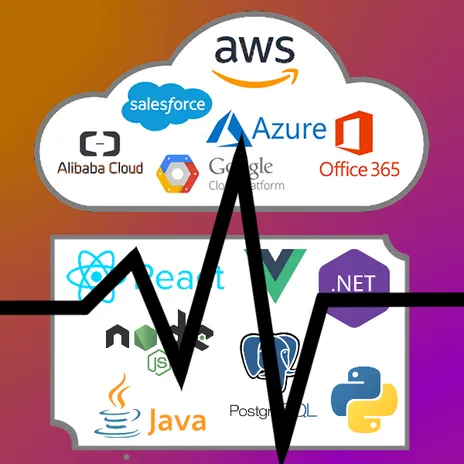
Working in cloud engineering has hammered that lesson home. I’ve spent years building and maintaining service-oriented architectures in Azure, writing C# APIs, and wiring up the pipelines that keep everything moving. There’s a certain satisfaction in seeing a system you designed handle load, recover from errors, and scale when it needs to.
I’ve also had the chance to work on projects where performance really mattered. Improving database query performance by 80% or reducing end-user load times by 60% didn’t just look good on paper — it made people’s lives easier. Watching a dashboard load instantly or seeing a blind or deaf user work with tools I helped build reminded me that the real goal isn’t the tech itself, it’s the impact it has.
DevOps plays a big role in that mindset. CI/CD pipelines, monitoring, containerization — these aren’t just buzzwords. They’re ways of making sure that once a system is live, it keeps working, keeps improving, and doesn’t grind to a halt when someone new joins the team. I like thinking of it as invisible scaffolding: no one sees it when everything is going right, but it holds everything together.
At this point, I see every project as a balance. Some parts are about raw problem-solving, like designing an algorithm in Python or setting up a Kubernetes cluster. Others are about people, like writing documentation that helps a new developer get up to speed. Both matter. If one side gets ignored, the system eventually falls apart.
That’s the approach I try to bring to every piece of work I do: make it fast, make it stable, and make it something that will still make sense when someone else picks it up a year later.
All green checks. ✅